
Artificial intelligence is already reshaping how AECO (Architecture, Engineering, Construction, and Operations) teams design, coordinate, and track construction. But the day-to-day question is rarely “Should we use AI?” It is “What should AI do, and what still needs an accountable expert?”
The most reliable approach is not replacement. It is a human-led workflow where automation handles repeatable tasks quickly, and experienced professionals provide context, quality control, and final decisions. To make that work, the inputs must be trustworthy. When AI is paired with consistent reality capture, disciplined BIM and VDC practices, and clear construction analytics, teams can move faster without losing confidence in the deliverables.
AI vs human expertise: what AI does well in AECO workflows
AI performs best when tasks are structured, data-rich, and frequent. In AECO, that often means turning large volumes of photos, scans, models, and logs into faster signals. Automation can help teams sort and label visual data, apply consistent rule-based checks, and surface differences between “what was planned” and “what is installed” sooner than a fully manual cycle. This works best when visual inputs follow a consistent capture plan.
That speed matters because construction decisions expire quickly. If a coordination issue is flagged early enough, it can prevent RFIs, late clarifications, and field workarounds that turn into change orders. AI can also make reporting more consistent, because it does not get tired of running the same checks week after week. Your team still defines the rules and thresholds, but AI can apply them at scale.
The guardrail is trust. The OECD AI Principles emphasize trustworthy AI aligned with human-centered values and accountability for outcomes. In practical terms, AI outputs should be treated as decision support, especially when schedule, safety, or cost are on the line.
AI vs human expertise: where people still own quality and risk
AECO work is full of edge cases. A design option can be technically valid but still wrong for an owner’s operations. A clash can be real in the model but irrelevant in the field, depending on means, methods, and sequencing. A progress signal can look “complete” in imagery but still fails an inspection. These are judgment problems, not pattern problems.
This is where human expertise remains at the control point. Professionals interpret ambiguous requirements, balance stakeholder priorities, and decide what is actionable. They also carry the accountability that projects require, because responsibility cannot be delegated to an algorithm when a decision triggers rework or a safety exposure.
Even the phrase “human in the loop” can be misleading if it suggests a model that only occasionally consults a person. Stanford’s HAI group has argued that for consequential decisions, humans must remain in charge rather than becoming a late-stage checkbox. For AECO teams, that translates into explicit review gates: define who validates outputs, what acceptance criteria look like, and what happens when AI and field reality disagree.
Information management standards reinforce the same point. ISO 19650 frames BIM information management around defined requirements, controlled exchanges, and disciplined processes. AI can assist with checks and comparisons, but people still need to define information requirements, manage approvals, and ensure what gets issued is fit for purpose.
AI vs human expertise: Make AI useful by fixing the inputs first
A common misconception is that better algorithms automatically deliver better project outcomes. In practice, AI quality is capped by the quality and consistency of the inputs. If photos are missing, scans are outdated, or model standards are inconsistent, you can end up with fast outputs that no one trusts.
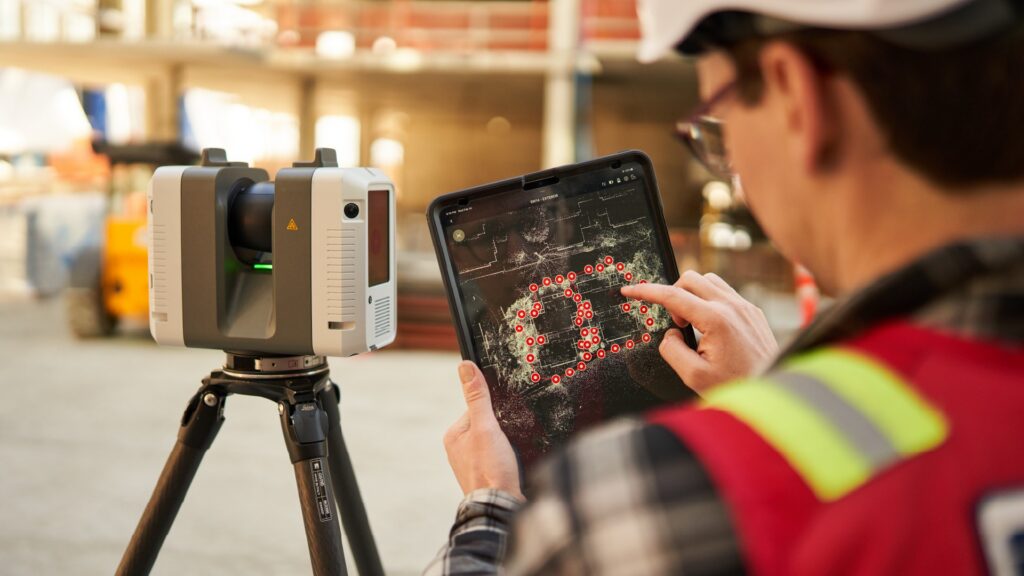
Reality capture is often the missing piece. When you standardize how you capture jobsite conditions, you reduce ambiguity for everyone, including AI systems. Consistent photo documentation, 3D laser scanning, and webcams create a shared record that helps teams verify existing conditions, confirm installation, and reduce disputes about what was on site. We at Hexagon Multivista describe capture services as helping teams track progress and deviations from plan, reduce delays, avoid rework, and support quality control across the building lifecycle.
From there, BIM and VDC practices turn reality into usable digital context. The work is not just creating a model. It is ensuring that the model is coordinated, grounded in current conditions, and aligned to how the project will actually be built. That is also where expert QA and QC belong, because a fast model that is wrong is worse than a slower one that the field can trust.
A practical definition helps: MIT Press describes “human-in-the-loop” as involving human interaction, intervention, and judgment that can control or change outcomes. In AECO terms, that intervention is your QA and QC, coordination decisions, and field validation steps that keep automated outputs connected to reality.
AI vs human expertise: Use construction analytics without losing trust
Construction analytics is where AI can shine, especially for progress reporting and deviation detection. Comparing large volumes of capture data to plans, schedules, or models is time-consuming by hand. With automation, teams can spot issues earlier, reduce the cost of surprises, and keep stakeholders aligned with a consistent reporting cadence.
The key is that the analysis must be explainable enough for stakeholders to act on it, and verified enough for them to believe it. A practical operating model is a simple loop: capture reliable reality, create coordinated digital context, then analyze for progress and deviations. Automation can do the heavy lifting of comparison and flagging, while experts confirm what is real, prioritize what matters, and communicate results in a way that supports decisions.
Hexagon Multivista’s Analyze services position this as automated progress reporting and deviation analysis designed for general contractors and project owners, with expert staff involved in delivering accurate, regular insights.
If you are building your own AI workflow, start small and make it measurable. Choose one scope where success is clear, such as reducing the time to publish a progress update or catching deviations earlier in a high-risk area. Define the inputs, define the outputs, define who signs off, then pilot long enough to learn where the edge cases live. Automation does not remove coordination work. It shifts coordination earlier, when issues are cheaper to fix.
AI vs human expertise is not a contest. It is a partnership model. When you keep experts responsible for intent and sign-off, standardize your inputs, and use analytics to surface early signals, you can move faster without losing trust in the outcome.
If you would like to discuss how we can implement cutting-edge AI capabilities into your construction workflow, click here to schedule a free 30-minute consultation with one of our AI BIM experts.